

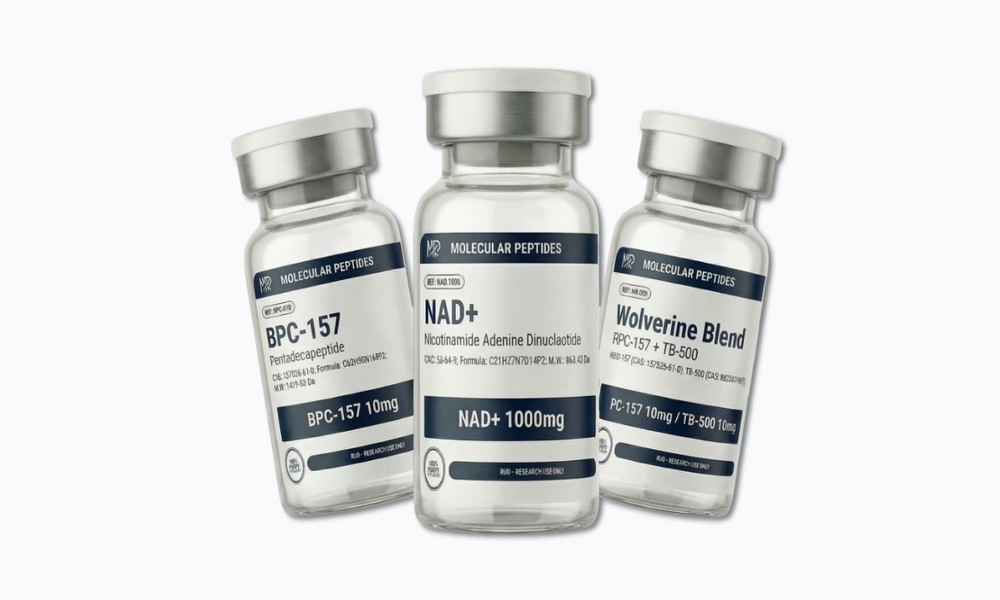
If you already work with research peptides, you know how easy it is to waste time and budget on poor quality material. I have spent years reviewing suppliers, documentation standards, and research practices. My goal here is to help you think clearly about sourcing, not to sell anything. When I look at suppliers like Molecular Peptides, I evaluate them using the same criteria I would recommend to any serious researcher. I focus on purity, testing, transparency, catalog depth, and operational discipline. I will walk you through how to assess research peptide suppliers, what matters when buying research peptides online, and why certain standards should never be compromised.
This approach helps you avoid unreliable peptide research chemicals and gives you confidence that what you order supports valid laboratory work.
Why research peptide quality matters
Research peptides play a role in many experimental models, from cellular signaling to metabolic pathways. Low purity or inconsistent batches can skew results and undermine entire studies. I always tell researchers that peptide quality is not an optional detail. It is foundational.
When you buy research peptides, you are not buying a simple commodity. You are sourcing a compound that must behave consistently under controlled conditions. That means:
- Verified purity at or above research grade standards
- Reliable synthesis methods
- Clear analytical validation
- Batch level traceability
Without these elements, results become questionable, even if protocols are followed correctly.
What defines a reliable research peptide supplier
When evaluating a research peptide supplier, I recommend starting with documentation. A serious peptide supplier in the USA should provide batch specific certificates of analysis for every product. These reports should confirm purity, identity, and testing methods.
Strong suppliers also show consistency across their catalog. This includes standardized vial labeling, clear storage guidance, and transparent availability status. If a supplier cannot clearly explain how peptides are tested or where analysis occurs, that is a red flag.
Key traits I look for include:
- Minimum purity of 98 percent or higher
- Third party testing for every batch
- Validated analytical methods such as HPLC or UV based analysis
- Clear designation as research grade peptides only
Buying research peptides online with confidence
Buying research peptides online can work well when suppliers operate with discipline. I advise researchers to avoid sites that blur lines between research use and other applications. Legitimate peptide research suppliers clearly state that products are for laboratory and in vitro research only.
Shipping practices also matter. Reliable suppliers process orders quickly, package materials securely, and provide tracking. Delays and vague delivery timelines often signal poor operational control.
If you plan to buy research peptides online, confirm that the supplier:
- Ships from within the United States
- Processes orders within one to two business days
- Provides domestic delivery within a predictable window
- Makes certificates of analysis easy to access
Research grade peptides and catalog depth
Catalog depth tells you a lot about a peptide research supplier. A limited catalog often indicates reselling or inconsistent sourcing. Broader catalogs usually reflect direct manufacturing relationships and stronger supply chains.
Molecular Peptides offers more than 57 individual peptides across multiple research categories. This includes compounds commonly studied in tissue repair models, growth hormone pathways, cognitive research, longevity studies, metabolic research, immune modulation, and specialty peptide research.
Products such as BPC-157, TB-500, NAD+, GHK-Cu, MOTS-c, Epitalon, Semaglutide, CJC-1295, Ipamorelin, Tesamorelin, and others are widely referenced in peer reviewed literature. Each listing provides purity confirmation, analytical methodology, vial size, and availability status, which supports informed ordering decisions.
Research blends and formulation standards
Blended peptides introduce additional complexity. I advise caution here because blends require testing as complete formulations, not as individual components. Reliable suppliers validate blends with the same rigor applied to single peptides.
Molecular Peptides offers pre formulated research blends designed for pathway focused studies. Examples include combinations used for tissue modeling research, gene expression studies, inflammatory pathway exploration, and endocrine pathway analysis. Each blend is tested as a complete formulation and supported with batch specific documentation.
This approach reduces uncertainty and supports reproducible research.
Transparency and research education
Another area I value is educational support. A strong peptide research supplier invests in helping researchers understand mechanisms of action and published findings. This does not mean offering guidance beyond research use. It means organizing credible literature in a way that supports responsible study design.
Molecular Peptides maintains a research library that catalogs peer reviewed studies and PubMed referenced literature. Content is organized by functional category and includes summaries of mechanisms and research contexts. This structure helps researchers review existing data without speculation or claims.
Operational discipline and compliance
Operational standards often separate dependable suppliers from risky ones. I always check whether suppliers clearly state legal and regulatory boundaries. Research peptide suppliers should require buyers to be qualified researchers and meet age requirements.
Molecular Peptides emphasizes compliance through secure checkout systems, discreet packaging, and clear labeling of products as research chemicals only. Orders are processed within twenty four to forty eight hours, and certificates of analysis are available for every product.
This level of discipline reflects a focus on consistency and accountability.
How to think about choosing a peptide supplier in the USA
When choosing a peptide supplier in the USA, I recommend focusing less on price and more on verification. Low prices mean little if purity or documentation fails. Reliable research outcomes depend on inputs you can trust.
Ask yourself:
- Can you verify purity and identity for every batch
- Is documentation complete and easy to review
- Does the supplier maintain consistent operational standards
- Is the catalog broad and clearly categorized
Suppliers like Molecular Peptides meet these criteria through transparent testing, detailed reporting, and a clear focus on research only use.
If you approach peptide sourcing with this mindset, you protect your work, your time, and your data. That is always the goal when buying research peptides for serious laboratory research.
